
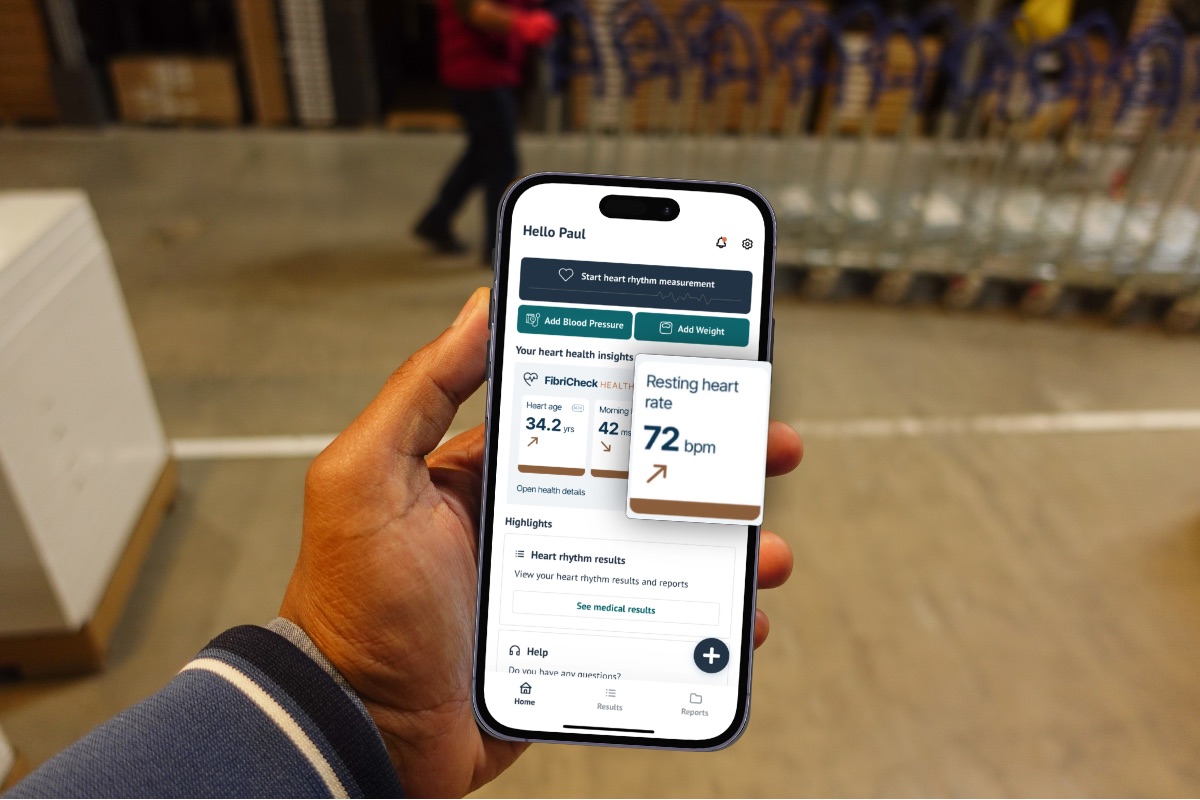
Your resting heart rate is one number, but it’s telling you two different things at once.
How fast your heart beats when you’re doing nothing is one of the most honest numbers in your body. It gives you two different insights: one in the long term, tracking your cardiovascular fitness level over months, and a short-term one that flags strain overnight or over the course of a few days. FibriCheck now surfaces both insights, from the same 60-second measurement you already take.
What does your resting heart rate say about your health?
Resting heart rate (RHR) reflects how many times your heart beats per minute while you are genuinely at rest. This number doesn’t just tell you one story. It tells you two.
Over the long term, it’s your cardiovascular fitness story. A gradually lower RHR over weeks and months is one of the clearest signs your cardiovascular fitness is improving. A stronger heart pumps more blood with each beat, so it simply needs fewer beats to do the job. What actually moves this number over time is aerobic exercise. Other factors that have an effect are body weight, smoking status, age, and genetics. Changes to your lifestyle show up over months, not overnight, which is exactly why the long-term trend matters more than any single reading.
Short term, it’s your strain story. A morning that shows your RHR sitting a few beats above your usual number is your body telling you something: poor sleep, stress, alcohol, dehydration, caffeine, sugary foods, large meals, heat, or the early signs of fighting off an illness can all have an effect. This number is a short-term signal, not a training outcome, so treat it as a nudge to take it easier today rather than an alarm.
This way, the same number can tell you two different stories depending on whether you’re looking at one measurement or the measurements over time.
Every adult has their own normal resting heart rate, and trained individuals often sit well below average. Your own baseline matters more than any general range.
How is resting heart rate calculated?
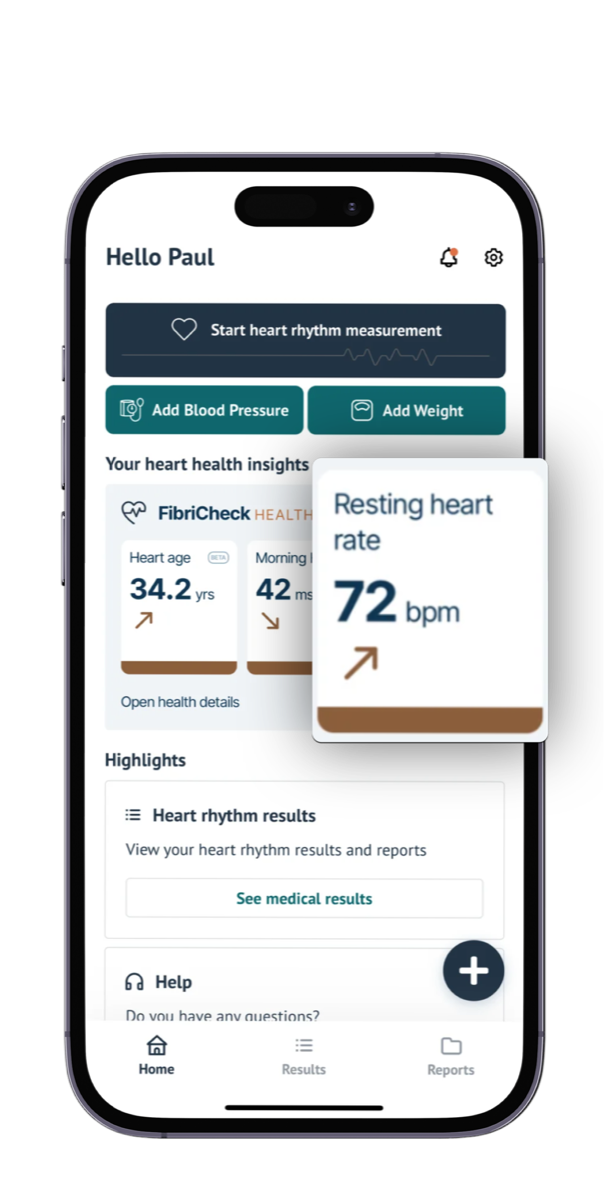
RHR is only calculated from measurements taken at genuine rest, and FibriCheck checks for that before showing you a number. Your reading only counts when the context you log confirms that you were either sitting or sleeping before taking the measurement. If you were standing, walking, or otherwise active, the app won’t show a misleading number. This context gate is what makes the FibriCheck RHR number one you can actually trust.
What else can you check with FibriCheck Health?
Resting heart rate is one of four insights built from the same underlying PPG signal:
- Heart Rate Variability (HRV): this reflects how your body is coping with stressors. A higher-than-usual number means you’re well rested and ready to go; a lower one is your body telling you it’s still recovering from stress, poor sleep, hard exercise, or that glass of wine last night.
- HRV-fluctuation: how steady your morning HRV has been over the past week. This number indicates the consistency of your recovery. A steady, low-swing week means your body is adapting smoothly and coping well. Bigger day-to-day swings suggest your system is being knocked around and recovery is uneven, so it’s worth looking at sleep, stress, and training load.
- Heart age: a slower mirror. While morning HRV reacts to short-term changes, heart age reflects months of accumulated habits, blood pressure, and other factors, distilled into one number that shows whether your heart is behaving younger or older than your real age.
Together the FibriCheck Health parameters turn a single daily measurement into a fuller picture of your heart health.
Start building your number
RHR only means something when it’s measured properly, at true rest, so FibriCheck checks for that before showing you a number.
Here’s how you can unlock this parameter:
- Make sure you’re at rest before taking your measurement. We therefore recommend taking the measurement in the morning, when your day has just started. This part matters, as your resting heart rate will only be calculated when you’ve logged your context as sitting or sleeping. If your context shows you were standing, walking, or otherwise active, FibriCheck won’t show a resting heart rate. If you weren’t sitting or sleeping before taking your measurement, then rest for a moment first.
- Open FibriCheck and take a measurement in the same way you always do: place your finger on the camera of your smartphone for 60 seconds.
- Keep measuring regularly. A single reading tells you something about today, while the trend over weeks tells you whether your cardiovascular fitness is actually improving.
No additional hardware or extra steps, just the measurement you already take while you’re calm and at rest.
Feeling stuck somewhere? Have a look at our FAQs or contact us via support@fibricheck.com
FibriCheck’s heart age, morning HRV, HRV fluctuation, and resting heart rate insights are available as part of the free trial, Essential, and Premium subscriptions. They are heart health insights and are not part of FibriCheck’s medical features. FibriCheck’s health insights are not intended to diagnose, treat, or prevent any disease. Heart health insights are only calculated for regular (green) measurements.