
Your heart has a story to tell. Now you can read it every day with FibriCheck’s new Heart Health features.
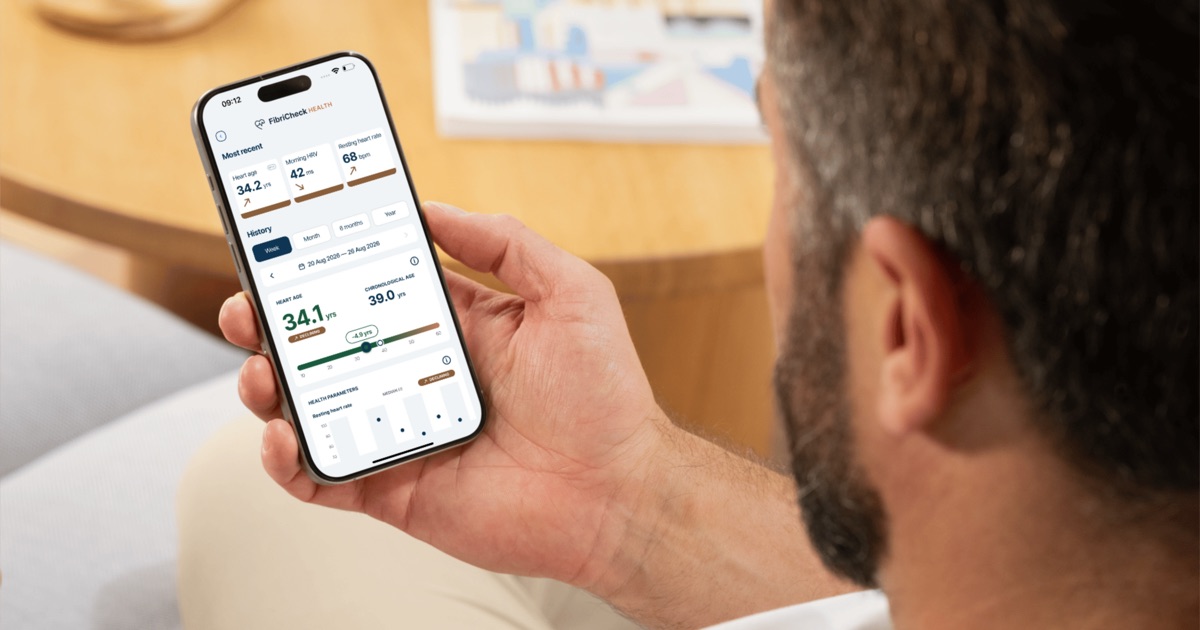
Here’s the good news first: according to the World Heart Federation, up to 80% of cardiovascular events such as heart attacks and strokes are preventable. Most of what determines your heart health isn’t fixed, it’s shaped daily by sleep, your blood pressure, movement, stress, and habits you already have some control over.
The catch is that heart health is usually invisible until there’s an issue. Most of us only pay close attention after a scare, a diagnosis, or a wake-up call we wish had come sooner. That’s not because people don’t care. It’s because there’s rarely been an easy way to actually get day-to-day insights into your heart health.
We think that should change. Your heart shouldn’t have to shout to get your attention. It should be something you can check easily anywhere, and often enough so that small patterns become visible early, while there’s still plenty of room to act on them.
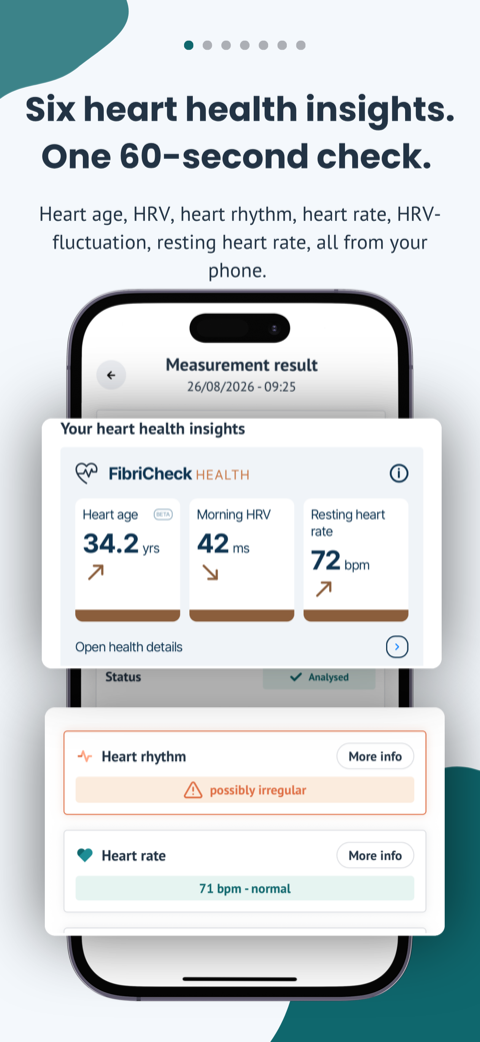
That’s what our new heart health features are built for. With one 60-second measurement you can check your heart rhythm, and by repeating these measurements regularly, you can see the story of your heart health through six insights at once.
Six insights, one 60-second measurement
By placing your finger on the camera of your own smartphone, FibriCheck gives you six insights that tell you more about how your heart is doing:
These insights come from two places. One is the certified medical check which shows you your heart rhythm and heart rate. The other four are health insights, which are derived from that same signal to help you see the patterns in your heart health. They are not medical results.
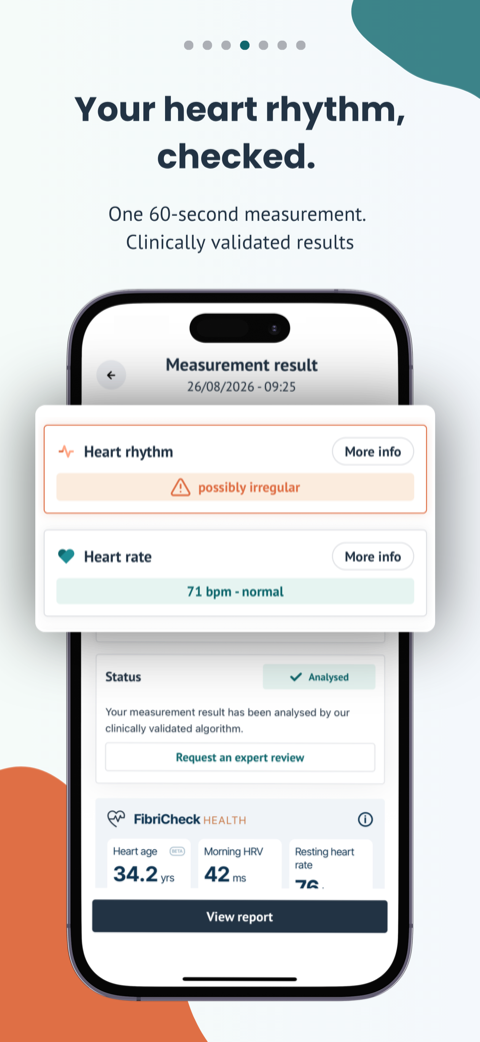
- Heart rhythm: the core measurement FibriCheck was built on, using the same PPG technology cardiologists rely on to detect heart rhythm disorders such as atrial fibrillation with 99% accuracy.
- Heart rate: your pulse, right now.
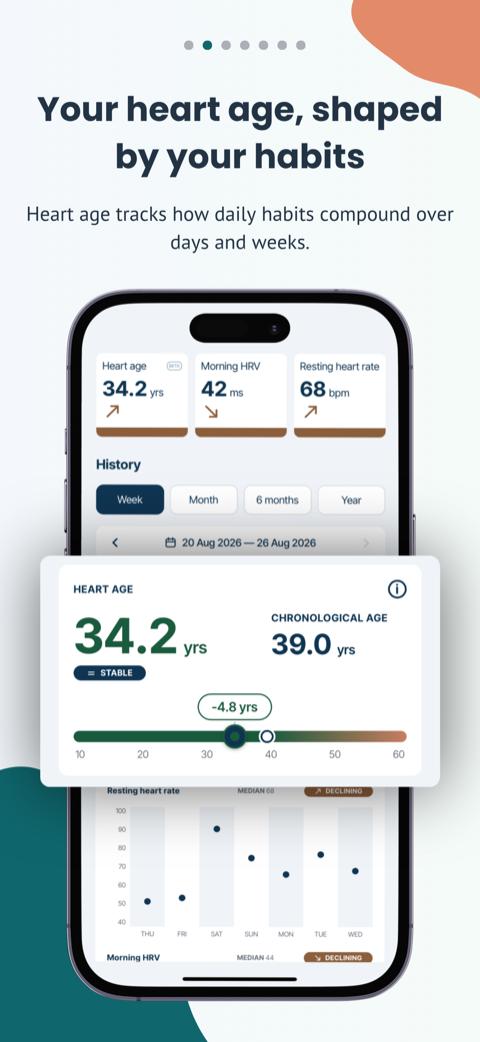
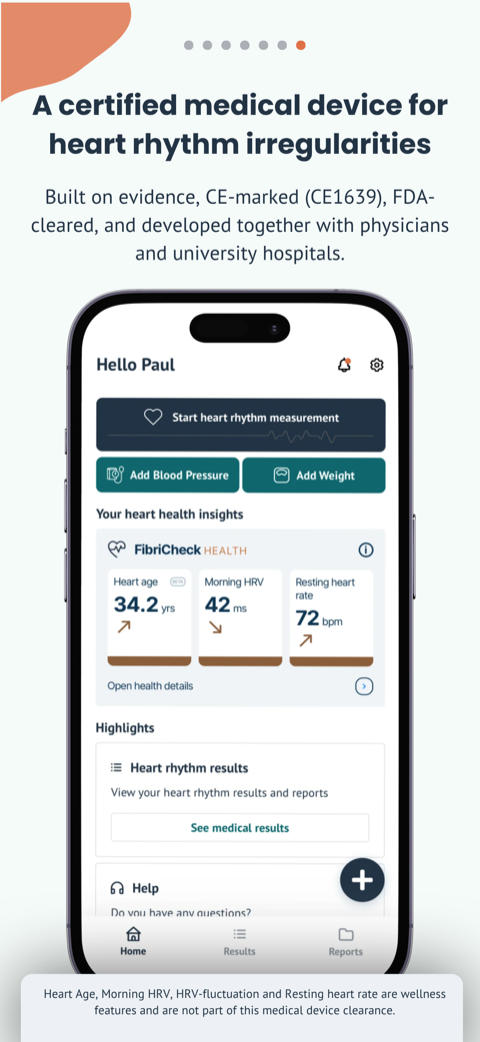
- Heart age: a single, easy-to-grasp number built from your FibriCheck pulse measurements. It tells you whether your cardiovascular system is behaving younger or older than your actual age. Unlike the daily recovery metrics, this one moves slowly, over the course of weeks and months, and reflects how your lifestyle is shaping your heart health over time. Lower than your real age is a good sign; higher is a gentle prompt that your habits have room to improve.
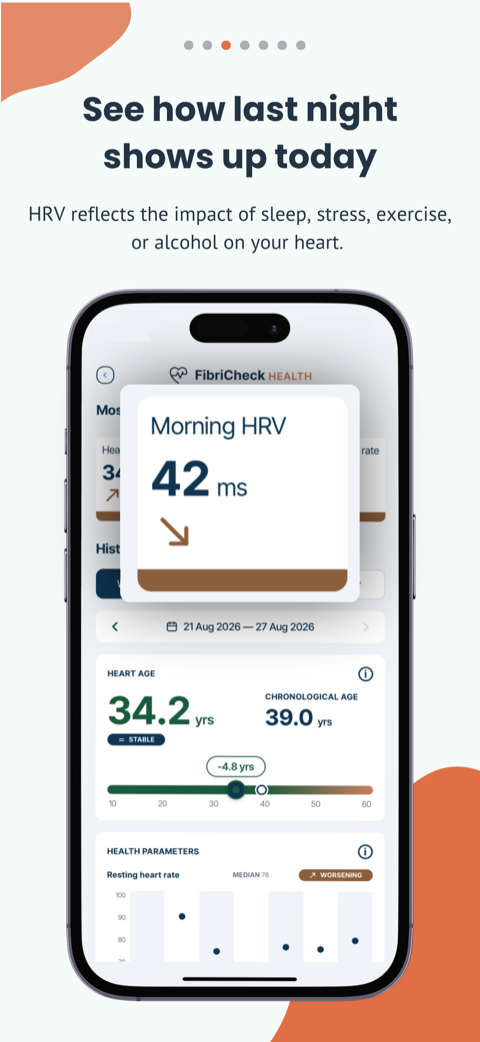
- Heart Rate Variability (HRV): this reflects your day-to-day readiness and recovery. A higher-than-usual number means you’re well rested and ready to go; a lower one is your body telling you it’s still recovering from stress, poor sleep, hard exercise, or that glass of wine last night. Also useful if you work out and want to know whether today is a push day or a rest day.
- Resting heart rate: how many times your heart beats per minute at rest. Over the long run, a lower resting rate reflects better fitness. Day to day, it’s a recovery signal: a morning that’s a few beats above your normal usually means your body is under strain from poor sleep, stress, alcohol, or oncoming illness.
- HRV-fluctuation: how steady your morning HRV has been over the past week compared to your baseline HRV. This number indicates the consistency of your recovery. A steady, low-swing week means your body is adapting smoothly and coping well. Bigger day-to-day swings suggest your system is being knocked around and recovery is uneven, so it’s worth looking at sleep, stress, and training load.
"My doctors told me for years. It was seeing my own heart age that finally got through to me."
During my pregnancy, doctors found I was likely to develop high blood pressure early. Ten years later, my numbers (110 over 85) looked fine to me — but my doctors disagreed, and prescribed medication. I refused. I felt too young. My numbers didn't feel extreme.
Then I started tracking with FibriCheck, and saw my heart age was well above my real age. Colleagues my age didn't have that gap. My first instinct was to blame the app. Eventually I started the medication anyway — and watched my heart age come back down toward my real age. I'm not there yet. But it's what got me started.
Heart rhythm and heart rate are part of the clinically validated, medical features of FibriCheck. The new FibriCheck health insights are derived from that same signal, and help you understand your own patterns as well as the effect your decisions have on your heart health.
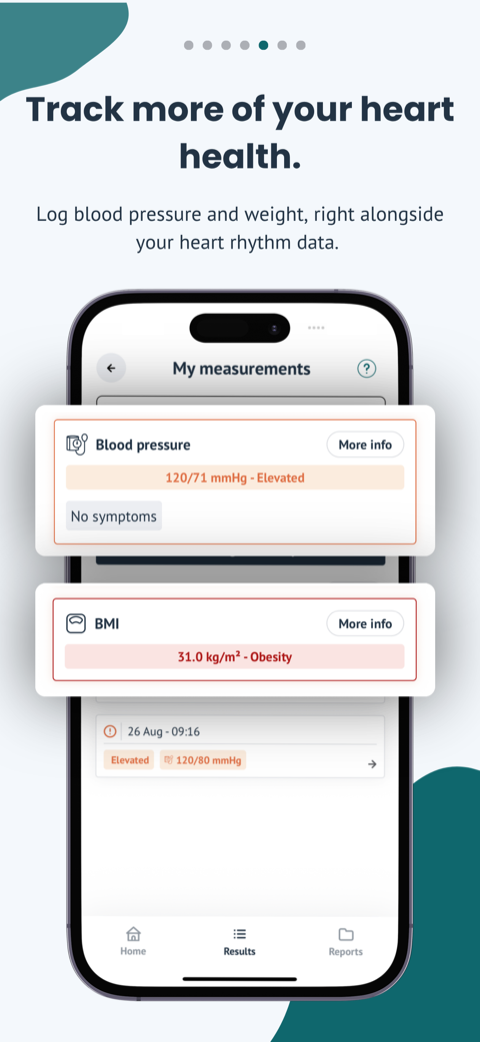
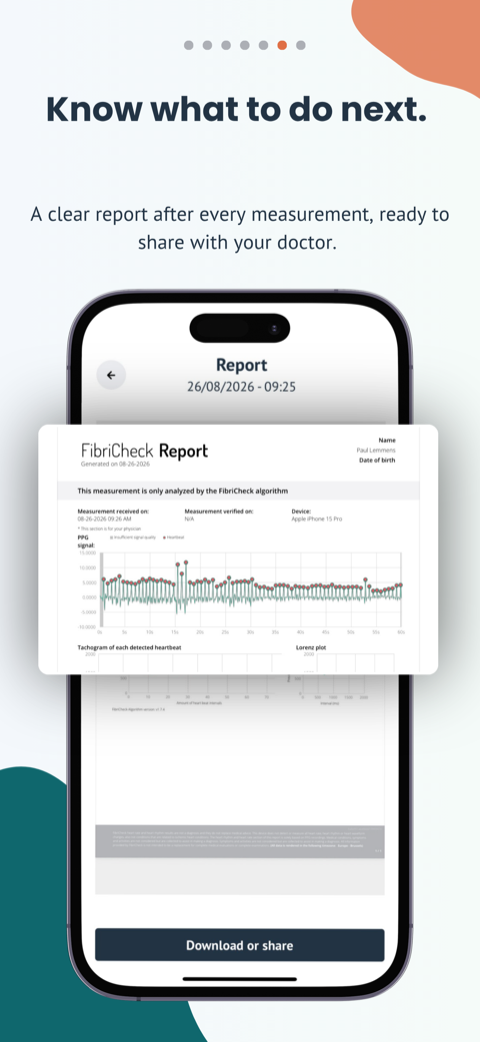
Besides the insights derived from these 60-second measurements, you can also log your blood pressure, weight, and any symptoms you may be experiencing to gain a full overview of your heart health, always accessible to you, and easy to share with your physician if needed.
See the effect of one choice, and the effect of a lifestyle
Together, two of our new insights answer two different questions: “What effect did last night’s decisions have on my heart?” and “Which effect does my lifestyle have on my heart health?”
Morning HRV is your fast mirror. It reacts to almost anything you do: a bad night’s sleep, a hard workout, a stressful week at work, feeling under the weather. Take a measurement two mornings in a row after a late night versus an early one, and you’ll likely see the difference for yourself. It’s daily proof that your choices register on your body, sometimes overnight.
Heart age is your slow mirror. It doesn’t move much day to day, but it compounds. It’s the running total of hundreds of small choices, sleep, movement, stress, alcohol, stacked up over days and weeks. Where HRV shows you the receipt for last night, heart age shows you the trend line of your life.
See the pattern, not just the number
These new parameters give you a clear insight into your heart health and show how your habits affect you day to day and over time. To make this effect easier to see, you can add context to your measurements: what you were doing, how you slept, whether you’d had a drink or worked out. That context is what turns a single number into a pattern you can actually learn from.
Based on your results, we provide you with tailored educational content and lifestyle guidance, so you can understand your numbers and build habits that help improve your heart health. When your numbers point to a theme worth working on, FibriCheck may offer you a step-by-step program.
Start with 60 seconds
You don’t need to overhaul your life to start seeing your heart health more clearly. You only need your phone, a minute of stillness, and a bit of curiosity about what your body’s been trying to tell you all along.
Open FibriCheck, take your first measurement, and start building the picture.
*FibriCheck Health is currently available within free trials, Essential and Premium subscriptions.